EEPmusicEEPmusic
Happy. Healthy. Musicians.
RSS
Menu
  • Book Release
  • Music Lessons
  • About
Piano Books

erinepearson / Parent Advice, Piano / Childrens Music Lessons, Erin Pearson, Kids, Kids Piano Lessons, Learning Piano, Music, Music Education, Music Lessons, Music Teachers, Music Teaching, Parenting, Parents, Piano, Piano Books, Piano Lesson Books, Piano Lessons, Piano Teachers / 0 comments

Which Piano Books Should I Buy My Kids?

June 1, 2015

Although finding a suitable lesson book for your child to use as they learn the piano is usually the teacher’s responsibility, I’m often approached by parents about about this topic. And it’s understandable. There are a lot of options to sort through and you don’t want to spend a lot of money on books your child won’t use. To save you time and trouble, I’ve identified a few books that have worked well for my students.  I’ve broken them down by age group, to make it easier to asses which books would be of most value to your child.

Ages 3-6
I recommend Faber’s First Piano Adventure: for the Young Beginner, Book A. The book contains cartoon characters that the kids LOVE and helps make learning fun. For mature 6 year olds with an advanced reading level, you can occasionally start them in Faber’s My First Piano Adventure: for the Young Beginning, Book B , although there will likely be a few learning gaps the teacher will need to fill in.  If that is not challenging enough for your child, I’d recommend starting them one age group higher with Faber’s Piano Adventures Primer Level.

(Ages 3-6: Supplemental Books)
I highly recommend getting the accompanying My First Piano Adventure: Writing Book A or the Piano Adventures Theory Primer Level, corresponding to their lesson book. Though most series have about 4 related books, I find most beginning students can only handle about 2 books at a time. As they grow into the routine of piano, after 6 months for instance, then I will add in other performance-style books.

Ages 7-12
For beginning students, I like to start them in the Alfred’s Complete Level 1 Book. I also occasionally use Faber’s Piano Adventures Primer Level  for the younger kids in this age group.

However, I find the book moves too slowly for this age group. But the next level up can move too quickly for them. To remedy this problem, I usually move them to that next level up, Faber’s Piano Adventures Series Level 1 after they complete their first set of books (roughly 9 months).

(Ages 7-12: Supplemental Books)
There are SO many options. In this age group, it is important that your child is introduced to music theory, scales, and additional performance repertoire.

For music theory, I incorporate Alfred’s Theory Book Level 1 Book within the first month of lessons, and then include Alfred’s Complete Notespeller after 2-3 months.

For Scales, I integrate the book Know Your Scales and Arpeggios as soon as possible. There are a multitude of scale books on the market, but I find this one has the best combination of drills for students to grow into (they’ll need a teacher to help them with it).

For performance, be patient or your child will get overwhelmed.  I usually allow another 4-5 months before adding in the performance books,for a few reasons:

  1. If you want them to play songs they like, it takes time to discover what they gravitate towards.
  2. They do their best when they’ve gotten into the flow of their regular lessons and mastered the basics.

Faber makes a series called PlayTime Books that I like for kids this age: Jazz/Blues Starter , A Pop Music Starter, A Classical Starter, and the accompanying Recital or Performance Books (by the same publisher who make your child’s lesson book).

Ages 13-18
Kids ages 13-18 need the same tenderness given to the young kids, but with gradually increasing responsibilities. To be honest, it is hard to get them excited about lesson books because they often just want to play the songs by their favorite artists. I generally teach their lessons using mixed methods for this reason. However, I still think a lesson book is a necessity (I prefer Alfred’s Adult All in One Course along with  Know Your Scales and Arpeggios)
Guitar Kid

erinepearson / Guitar, Parent Advice / Childrens Music Lessons, Erin Pearson, Guitar, Guitar Lessons, Guitar Teaching, Kids, Kids Guitar Lessons, Learning Guitar, Music, Music Lessons, Music Teachers, Music Teaching, Parenting, Parents / 0 comments

Which Guitar Books Should I Buy My Kids?

May 1, 2015

Finding the right guitar books and supplements can be daunting, but it doesn’t have to be. Follow these simple guidelines and you’ll be well on your way!

When your kids begin to study the guitar it might seem challenging to find an appropriate lesson book that works for them. Fortunately, most teachers will be familiar with a variety of curriculum books and should be able to provide recommendations for you. Use them as your point of reference so you avoid purchasing multiple books unnecessarily.

But even as a teacher, it can still be a difficult to find the right books to get your child started, depending on their age and personality. I know many teachers who don’t use standardized lesson books at all, for this very reason. (I’ve been in that camp before. Now I use combination methods to achieve optimum results.) In my experience, the majority of kids do actually end up “feeling” better about their progress when they use lesson books (whether or not they realize it), because the structure allows them to see their marked improvement, which is actually very important for the to want to continue trying.

My students respond best to the following guide books:

Ages 12 and under
Alfred’s Kids Guitar Course  is top-notch. The pictures are big and the instructions are clear. I’ve found the same book works as well for a 5 year old as it does for a 12 year old, which is a rare and wonderful surprise. It is a very simple, starter book. But they will feel like they can play something on guitar right away. They’ll also be able to see their progress, which is half the battle.

Ages 8+
I start with Alfred’s Kids Guitar Course but I also like to introduce Grant Gustafson’s The Art of Guitar: Beginning Classic Method at the same time. The Gustafson book is not an easy read for children, but with some guidance from a parent or teacher, this is simply a magical learning book for all ages. My favorite thing about this book is that it combines a lot of different types of guitar notation, theory, and it does a great job explaining rhythm better than I’ve seen in done in other books.

Ages 12+ (adults too!)
Working through Grant Gustafson’s The Art of Guitar: Beginning Classic Method is a great place to begin. Your child will likely want to learn popular chords to their favorite songs in addition to a book like this. There is also a basic chord chart in the back of this book which they can use to learn on their own, or I like to give students a “quick wins” with songs they’ve heard by getting them started in Hal Leonard’s Strum & Sing 5 Chord Songbook.

Note: Because neither of these two books aren’t necessarily always available in stores, you will likely have to order them online or ask your local music shop to order them for you.

Additional Tips Getting Started:

Music theory concepts are easier to see on the piano than any other instrument. I advise my guitar students to also take beginner piano lessons or incorporate 10 minutes of piano into their guitar lessons. If the teacher is willing to do this, your child will have a much better comprehension of music theory and utilize those skills faster, even if they are not interested in making the piano their primary instrument of study.

I require all my students to take piano regardless of their primary instrument. And I’m partial to using keyboards with weighted keys for piano lessons because they build finger strength, which is also beneficial for guitar. But, you don’t need to buy anything glamorous. Anything that will work for learning the basics will be suitable for your child’s needs.

Piano Teacher

erinepearson / Parent Advice, Piano / Childrens Music Lessons, Kids, Music, Music Education, Music Lessons, Music Teachers, Music Teaching, Parenting, Piano, Piano Lessons, Piano Teachers / 0 comments

5 Things You Should Know Before You Hire a Piano Teacher

April 1, 2015

Your child wants to start playing the piano and you are excited get them started! But you are also overwhelmed because you want to select the right teacher and have been bombarded with conflicting advice from other parents, educators and musicians. With so many opinions, how will you even begin to select a teacher?

Here are 5 things to consider before you make your decision:

1. Music teaching is an unregulated industry.
We hear the word unregulated and we naturally freak out a bit, but in this case, it is mainly a GOOD thing. It simply permits music teachers to adapt their teaching style to provide the best instruction for their students. Many teachers form alliances, are certified in specific methodologies, and teach for music schools or universities, while others hone their skills in unconventional ways, like freelancing and building home studios.

But the flip side of teaching in an unregulated industry means not all teachers will provide the the same type and/or quality of music education to your kids. Knowing this before you hire an instructor will help you ask the right questions and ensure the person you choose is a good fit for you and your child.

2. The best method is the one that works.
There’s an abundance of well-educated teachers, but don’t let anyone convince you their method of teaching is the only way. The best piano method is the one that works for what your child wants to learn to do! Teachers are influenced by many things, including their training and academic background, performance career, expertise in specific genres as well as the region of the country where they reside. Every teacher has something to offer, but your job is to find out if what they are offering is going to be is in line with your child’s needs.

3. Clarify your goals.
Not every piano teacher is well versed in every style of music. It is a rare gift to find a teacher with the versatility to understand multiple styles. So you have to start with the end in mind. What does your child want to accomplish (worship band, rock band, honky tonk, singer-songwriter, jazz)?  It’s okay if you don’t have the answer to that question yet, but you’ll have to do some investigating.

For beginning students (ages 3-12), look for a teacher who can give your kids a SOLID music theory foundation that will take them wherever they want to go as their interests develop. This teacher will likely have a diverse musical background, and will feel comfortable with both classical and popular piano genres.

Students 13 and older are likely to have their own musical preferences and a strong opinion about what they want to learn. They’re not trying to be difficult. They’re simply prioritize their  musical expression over repetitive drills or playing music that doesn’t interest them (even though those drills help them improve).

The goal is to keep your child interested and practicing, regardless of the method used. For optimal success, follow their lead and find a teacher who is willing to teach them what they want to know, and sneak in the foundational elements of music theory.

4. You get what you pay for.
Because it is an unregulated industry, the price of music lessons fluctuate greatly. Instead of only looking at the dollar amount per lesson, focus on the VALUE provided in the lessons. Your child can study with a less expensive teacher, but perhaps they could have learned the same material in half the time with a different teacher, whose rate is more expensive.

On the other hand, a teacher who charges a cheaper rate might be the best fit for your family. Perhaps they have less overhead and don’t need to charge the higher rate another teacher would to keep their business up and running. A cheaper rate doesn’t always mean they aren’t a good teacher. You just have to do your homework and find out.

You should consider spending more money on a music teacher during your child’s formative years (ages 3-10), because they can cover a lot of ground in a short amount of time.

Teachers who work well with children should be considered for their multi-faceted skill set. They are a great investment because they are able to play many roles (academic tutor, behavior specialist, psychologist, music teacher, etc.)  due to the extensive training and education needed to do their job well.

5. Where do I find a good teacher?
There are a lot of great places you can find music teachers. Network with other parents. Check out your local music shops and the nearby colleges and universities. Or you could join the thousands who find a teacher online at websites like www.thumbtack.com.

If you ask vague questions, you’ll get vague answers. So be specific, know what you want and don’t be afraid to ask for what you need and you’ll find a great teacher for your child.

Going to an Audition

erinepearson / Musical Theatre, Parent Advice / Audition, Audition Preparation, Childrens Music Lessons, Erin Pearson, Girls, Kids, Music, Music Education, Music Lessons, Music Teaching, Musical Theatre, Parenting / 0 comments

What Not to Wear to An Audition (For Girls)

January 18, 2015

It is audition season. Your daughter has been taking music lessons and is looking for forward to auditioning for the school musical. Your child may be going for the lead role in her audition, and many roles are being cast on audition day.  Appearance is everything, but here are a few places where girls especially can go wrong.

1. Too Much Make Up
Many girls think that if they are really glamorous on audition day, they will have the winning edge above the competition. Remember, the theater is full of wigs and make up. Looking NEUTRAL is best because it means you can have many looks and it could open you up to more roles.

A neutral make up palate will allow your daughter to feel confident and pretty, while allowing the director a change to envision how she could look in a host of roles.

Maison Rabih Kayrouz: Backstage - Paris Fashion Week Womenswear Spring / Summer 2013

2. Too Bulky, Too Short, Too Low Cut
Neutral. Neutral. Neutral. Your daughter should look good and feel confident, but not be distracting. Regardless of age, too much of anything can distract from how your daughter naturally looks including jewelry.

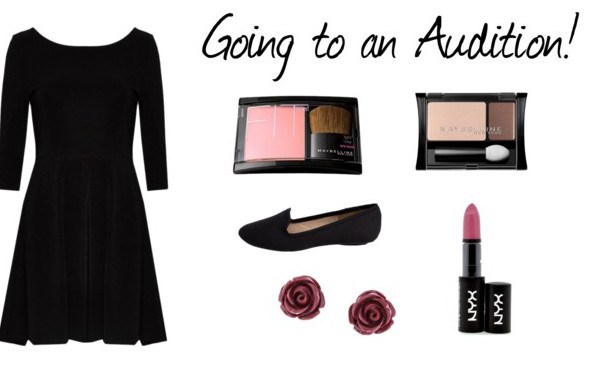
Black has been used in auditions for ages for a reason: it is simple, classical, and neutral. I recommend wearing a classic little black dress with minimal jewelry. If your child wants a little bit of color, add a colorful scarf or accessory of some kind. But please, not too loud. Strive to have a nice neutral, non distracting look that flatters the figure.

Little Black Dress

3. Too Tall Shoes!
Tall shoes may flatter the figure, but if there are any height issues with any of the men, it can be an immediate game over if the director thinks the girl is too tall for the guy playing her opposite. Also, I’ve seen many a student stumble wearing high heels they haven’t practiced in. Traditional high heels aren’t worth the risk.

Ballet flats are cute, in fashion and perfect for auditions! You can even get them in a cute color if your daughter wants to add a little personality to her outfit. In addition, if theatre is something your child is going to be involved in longer term, it might be worth investing in character shoes, which are high heeled, but with a solid base that is also good for dancing. Your daughter can learn to walk in these in the off season so they are not new at the time of her audition.

Ballet Flats


4. Don’t Forget About the Dance Audition!

Regardless of whether or not your child is currently a dancer, there will likely be a dance portion to the audition to see if she can move. This is just a part of it, so prepare your child (dance lessons are also a great idea).

Make sure to ask about the details. Yoga pants and a tank top are usually just fine. However, more some more serious dancers might wear tights and leotards. Character shoes or jazz shoes are a must but always be prepared with TAP shoes just in case (Even if they say you don’t need them! Directors change their minds a lot!).

Back to Top

© EEPmusic 2025
Powered by WordPress • Themify WordPress Themes